



EU Pay Transparency Directive: What you need to know and do as an employer

EU Pay Transparency Directive: What you need to know and do as an employer

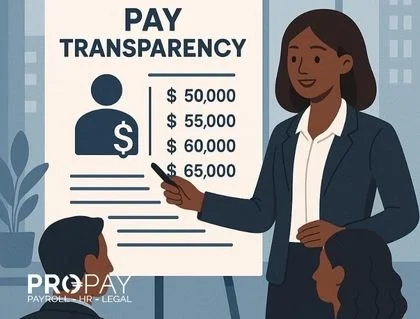
With the upcoming deadline for transposing the EU Pay Transparency Directive, employers must prepare themselves for the requirements of this directive.

This newsletter outlines the key points of the directive and the practical steps you can already take to prepare yourself for the upcoming changes.

Regarding, the minimum wage, the recent law of 17 December 2024 has already partially transposed the EU Directive 2022/2041 on adequate minimum wages in the EU. However, the remaining provisions are not implemented in the Belgian legislation yet which leads to uncertainties.

! Please note that Denmark, filed a case before the Court of Justice of the European Union in 2022, after the Directive was passed by the EU, arguing that the Directive violated the Treaty on the Functioning of the European Union. The Advocate General recommended repealing the Directive earlier this year. The Court’s judgment and its impact for the future European legislations are expected later this year.

1. Equal pay and gender pay gap

At both the EUand Belgian level rules already exist to safeguard the right to equal pay and aim to combat discrimination between men and women.

Despite this, data from 2025 reveal significant pay gap between men and women persists. The EU Directive aims to strengthen the enforcement of existing rules and make it easier to monitor and enforce the right to equal pay.

2. Current Belgian reporting obligations

When it comes to the more specific provisions of the Pay Transparency Directive, national legislation already exists for certain employers. The Act of 22 April 2012 on combating the pay gap between men and women foresees a reporting obligation, which is one of the key elements of the EU Directive. In practice, this remains mainly a formality: employers must complete a form reporting the pay gap every two years, but this does not necessarily result in concrete actions.

3. Essential aspects of the EU Pay Transparency Directive for employers: information and reporting obligations

The aim of this Directive is clear: eliminate the gender pay gap. The Directive emphasizes the information and reporting obligations on the gender pay gap and sets a number of minimum requirements. This implies that the Belgian legislation must at least implement the obligations foreseen in the Directive or develop more far-reaching measures.

The Directive applies for employers in the public and private sectors, for all the employees with an employment agreement but also to job applicants. Any employer with at least one employee will have to comply with at least one of those obligations.

Regarding the minimum wages, the recent Act of 7 December 2024 is a partial implementation of the Directive 2022/2041 on adequate minimum wages in the European Union.

Firstly, an information requirement does exist towards both the applicants and the employees.

Important attention points are:

  • Informing about the initial pay or its range. This obligation already applies before a candidate comes in for an interview;
  • Prohibition from asking job applicants about their current salary ;
  • Use of job vacancy with content and job titles that are gender neutral and prohibition from using discriminatory recruitment process;
  • The criteria that are used to determine employees’ pay, pay levels, and pay progression need to be easily accessible to the employees. (Employers with fewer than 50 employees can be exempted from this obligation);
  • Right to request and receive information on the employee’s individual pay level, broken down by sex, for categories of employees belonging to the same category;
  • Informing the employees annually of their right to receive the above mentioned information;
  • Prohibition to any restrictions for employees to disclose their pay. Such of clauses must be removed from the employment agreement, working regulations and other documents.

In addition to the information obligation, the Directive also includes a reporting obligation. According to the current Belgian legislation, the companies that employ more than 50 employees are already required to report general pay gap figures in Belgium. However, the Directive requires the employers to report within the various salary categories of employees, also including additional salary components.

The salary categories group consist of employees who perform “equal” or “equivalent” work. The latter is defined based on four criteria: skills, effort, responsibilities and working conditions.

This implies that, employees, employee representatives, labor inspectors and other competent institutions for equal treatment have the right to request clarifications. In this case, the employer is obliged to respond within a reasonable period of time and to find a solution if the gender pay gap differentials are not justified by objective and gender-neutral criteria.

Depending on the number of employees, a different deadline applies to this reporting requirement:

Number of employeesDeadlineRelevant figures
> 250Yearly reporting as from 20272026
> 150-249Triennial reporting as from 20272026
> 100-149Triennial reporting as from 20312030
Based on national law or on voluntary basis

4. What can you do as an employer in preparation for the Directive?

As employer, you can already take some preparatory steps:

Pro-Pay can assist you with the following steps:

  • Evaluation of the recruitment process
    • Refrain from asking questions about the current salary and provide the starting salary before the interview;
    • Using gender neutral and job titles and job vacancy;
    • Evaluation of the current recruitment process, ensure that it is non-discriminatory;
    • Train the recruitment staff;
    • Invest in benchmark exercises.

  • Evaluation of company practices
    • Analyze clauses related to the confidentiality of the remuneration included in the employment agreement and the working regulations;
    • Evaluate the criteria used to determine the remuneration, levels and development but also for the extra-legal and variable salary elements. We can assist you with analyzing your remuneration policy;
    • Submit plans to the employee representatives (if applicable);
    • Train HR Staff and managers.

  • (For employers with more than 100 employees) Preparation of the report obligation:
    • Calculation of the existing salary gaps at the company level and per category of employees;
    • Identifying potential justifications for identified pay gaps;
    • Draft an action plan in order to remove unjustified pay gaps.

Do not hesitate to contact us for more information and assistance via legal@pro-pay.be

Leftover holidays? The do’s and don’ts in a nutshell 2025-2026

Leftover holidays? The do’s and don’ts in a nutshell 2025-2026

The end of the calendar year is approaching: colleagues are making arrangements for the holidays between Christmas and the New Year and a few forward-looking souls are already dreaming about their holiday destination for the summer of 2026. On the other hand, the workaholics don’t have time for time off… Let’s look into some frequently asked questions about holidays.

Accrual of taking annual leave. What are the basic rules?

According to the Belgian legislation on holidays, an employee accrues holiday rights based on her/his professional performance in the preceding calendar year. The calendar year during which the employee takes her/his holidays is referred to as the holiday year. The preceding calendar year, during which the entitlement is accrued, is referred to as the holiday reference year.

The same rules determine that an employee needs to take her/his legal holidays before the end of the holiday year. In other words, the employee is obliged to take all her/his legal holiday accrued in 2024, by 31 December 2025.

My employee asks if (s)he can carry over holidays to the next year. Is that allowed?

The law states that carrying over leave is not allowed and that an employee who does not take all of her/his holidays consequently loses the non-taken days. A white-collar worker can therefore not ask her/his employer to pay these days.

For blue-collar workers the rules are different: they receive their holiday pay directly from the National Holiday Fund and the holiday pay remains acquired, whether or not they take all their holidays.

Please note that in practice, a lot of Belgian companies allow for a limited number of legal holidays to be carried over at the employee’s request which then have to be taken within a limited timeframe.

Reminder: since holiday year 2024, statutory holidays can actually be carried over in cases of prolonged absence due to a (work-related) accident, occupational illness, incapacity for work, maternity leave, birth leave, prophylactic leave, adoption leave, foster care leave, or foster parent leave.

! It must be a case of force majeure, where the employee cannot possibly still take his holidays in 2025. For example, it does not include the case where, towards the end of the year, the employer refuses to let an employee, who was sick for six months during the year, still take his holidays. However, if an employee is ill from, for example, 3 November 2025 to 17 January 2026, he is unable to still take his legal holidays in 2025.

In these cases of suspension, the untaken holidays must be granted within the 24 months following the end of the holiday year.

Holiday pay for days not taken is paid to white-collar workers by 31 December of the relevant holiday year. Blue-collar workers retain their holiday pay through the holiday fund.

What are the possible consequences for me as an employer if not all the holidays are taken?

As an employer, you have the obligation to ensure that your employees take their holidays. Not meeting that legal obligation can be sanctioned with an administrative and even a criminal fine.

In practice, you need to make sure to inform your employees sufficiently about the fact that they need to take their outstanding holidays. If your employee, notwithstanding your efforts to warn her/him, decides not to take the days (s)he is entitled to, you will not risk any of the aforementioned sanctions.

My company grants the employees extra-legal holidays on top of their legal holidays. What does the law state with regard to those days?

The Belgian legislation does not provide for a legal framework when it comes to extra-legal holidays. The practical consequence is that you as an employer can determine the playing field and can consequently state that extra-legal holidays can be carried over. We recommend determining the rules in the working regulations of the company.

Year-end adjustment – vacation pay deduction in December 2024 for new employees

As explained in our newsletter, the procedure for deducting single holiday pay for new white-collar workers has been changed in 2024. From 2024, this deduction happens in two phases, with a final adjustment in December. This adjustment considers the amounts stated on the vacation certificate, minus any amounts already deducted during the year.

The result of this final settlement may be a refund or an additional deduction. This will be clear in the December pay slip.

How can I keep an overview of the outstanding holidays of my employees?

If your HR department does not have an own calendar to keep track of the holiday entitlement of the employees, Pro-Pay can assist with a practical tool. Your Easy Absence Planner (YEAP) can assist you in the management of all types of absences, including all sorts of leave. It is of the greatest importance to report all the absences of your employees in view of your legal obligations as an employer and the entitlement of the employee to certain social benefits.

With YEAP, the management and tracking of the holiday counters of your employees is really straightforward.

Action!

  • Provide your employees with an overview of their outstanding legal holidays.
  • Remind them of the rules regarding taking and carrying over holidays.
  • If this has not yet been dealt with: determine the rules regarding taking and carrying over extra-legal holidays, preferably in the working regulations.

Public holidays in 2026

Public holidays in 2026

2025 is gradually coming to an end. With the new year approaching, some are already looking ahead to their holiday planning for 2026. Below is an overview of the public holidays in 2026, along with a brief reminder of the applicable rules regarding substitute days.

Public holidays in 2026

New Year’s DayThursday, 1 January 2026
Easter MondayMonday, 6 April 2026
Labour DayFriday, 1 May 2026
Ascension DayThursday, 14 May 2026
Whit MondayMonday, 25 May 2026
Belgian National HolidayTuesday, 21 July 2026
Assumption DaySaturday, 15 August 2026
All Saints’ DaySunday, 1 November 2026
Armistice DayWednesday, 11 November 2026
ChristmasFriday, 25 December 2026

Applicable rules

As a rule, employees cannot work on public holidays in Belgium.

If a public holiday falls on a Sunday or another day which is normally a non-working day (usually a Saturday), it must be replaced by a replacement day on a normal working day. The employer, however, is obliged to pay the employee a normal salary for that holiday. In the list above, the public holidays that fall on a non-working day in the course of 2026, have been marked in bold. Employees are entitled to two replacement days in 2026, for Assumption Day (15 August) and All Saints’ Day (1 November).

The law of 4 January 1974 provides for the manner in which replacement days should be determined. In theory, the Joint Industrial Committee competent for each sector may decide when replacement days shall fall, but we do not see this very often in practice. If the Joint Industrial Committee has not taken its decision before 1 October 2025, each company may decide for itself when the replacement days for its employees will fall in 2026. The company may take that decision in one of the following ways:

  • By the Works Council;
  • If the company has no Works Council, by agreement between the union representation and the employer;
  • If the company has a Works Council nor union representation, by agreement between all the employees and the employer;
  • If no agreement can be reached for the whole company, individual agreements may be drawn up between the employer and each employee.

If replacement days cannot be decided upon using one of the solutions above, they automatically fall on the next normal working day following the public holiday (usually a Monday).

Employers must inform their employees of the replacement days for 2026 by displaying a signed and dated document on the company premises before 15 December 2025. You can obtain a template of such a document from your payroll business partner.

Indexation forecast January 2026 JIC 200

Indexation forecast January 2026 JIC 200

Each year in January, salaries are adjusted to the cost of living for employees of companies subject to Joint Industrial Committee 200 (JIC 200). In Belgium, this is referred to as the indexation of salaries.

This indexation is a mechanism whereby salaries are linked to the evolution of the flattened health index. The monthly salary is more specifically increased by a percentage equal to the inflation rate of the previous calendar year. The indexation system as foreseen by JIC 200 is applicable to all employees falling under the scope of this Joint Industrial Committee.

Based on current forecasts, we expect that the indexation percentage for January 2026 will be approximately 2.13 %.

We will inform you of the final index percentage by early January 2026 at the latest.

Adjustment mileage allowance as from 1 October 2025

Adjustment mileage allowance as from 1 October 2025

Employees who use their own car to travel for professional purposes, can receive a reimbursement from their employer for the costs incurred.

It is not necessary to be able to prove the exact amount of these costs as the authorities have fixed a maximum lump sum per kilometre that is accepted as a cost proper to the employer (“mileage allowance”). This mileage allowance is exempt from social security contributions and taxes if the maximum amount per kilometre is not exceeded.

The new amount applicable starting from 1 October 2025 until 31 December 2025 is 0.4312 EUR per kilometre.

As a reminder: the amount applicable from 1 July 2025 until 30 September 2025 was 0.4309 EUR per kilometre. Note that there is a slight increase compared to the previous amount.

However, it is alternatively possible to opt for the annual indexation of the mileage allowance. An employer can therefore choose between the quarterly indexed amounts or the annual indexed amount, which amounts to 0.4449 EUR per kilometre for the period from 1 July 2025 to 30 June 2026. In the latter case, the employer should thus maintain the same amount during the entire period.

We reiterate that the number of kilometres per year should not be abnormally high (max. 24,000 kilometres per year). If the number of kilometres is higher, proof must be furnished.

The quarterly and yearly indexed amounts are maximum amounts. Employers can reimburse the driven kilometres at a lower rate without any discussion. A higher reimbursement is also possible, but in that case, the burden of proof lies with the employer and the employee. They should be able to prove that the allowance granted is in line with the actual cost.

Temporary protection for Ukrainian nationals and the possibility of working in Belgium

Temporary protection for Ukrainian nationals and the possibility of working in Belgium

Since 4 March 2022, the European Union has granted temporary protection to Ukrainian nationals who resided in Ukraine before 24 February 2022. The period for which temporary protection is granted is renewed annually and was extended in July 2025 to 4 March 2027.

Third-country nationals residing in Belgium under temporary protection can work for employers in Belgium without a work permit. This is advantageous for employers: they do not need to apply for a single permit before hiring an employee with temporary protection. However, if these employees plan to settle permanently in Belgium, it may be worthwhile for employers to apply for a single permit for them.

Indeed, when the temporary protection scheme ends, these employees will be expected to return to their country, or the employer will have to apply for a single permit at that time. By applying for a single permit, the employee’s status changes from temporary protected to migrant worker.

The advantage of migrant worker status is that the years worked in Belgium under this status count towards obtaining a permanent residence permit in Belgium. With a permanent residence permit, one is exempted from a work permit/single permit. A permanent residence permit also creates the possibility of applying for Belgian nationality.

Switching to migrant worker status entails no risks for the employee. If the conditions for migrant worker status are no longer met, for example, due to unemployment, the Ukrainian citizen can again invoke the temporary protection status they previously held (as long as that protection remains applicable).

Pro-Pay is at your disposal for all your immigration questions related to the employment of foreign workers and can handle the single permit applications for your company. For more info, you can contact legal@Pro-Pay.be

Single permit: The rights and obligations of employers and employees

Single permit: The rights and obligations of employers and employees

An employer who wishes to employ a foreign worker with a nationality from outside the EU in Belgium must, in principle, apply for a combined permit (single permit) prior to employment. On the other hand, if the foreign candidate already lives and works in Belgium, the employer must first ensure whether the candidate may be exempt from a single permit, in which case the candidate can be hired immediately. In case a single permit needs to be applied for, the application must go through two stages, namely with the region where the employee will be employed, followed by the Immigration Service of the Ministry of the Interior.

Once the combined permit is approved, and after obtaining a D visa in case the employee lives abroad, the employment of the foreign candidate can start. If the candidate lives and works in Belgium, he can already start to work for the new employer, as soon as the region has issued the work permit.

That said, the single permit applied for by the employer comes with several obligations for the employer that are sometimes overlooked.

The employer must:

  • apply for a new work permit if the place of employment changes
  • ensure that the salary is paid in accordance with the scales that apply to the sector and job level or in accordance with the minimum wage that applies to the category for which the single permit is requested.
  • inform the competent authority in the event of termination of the employment contract and in the case of any significant changes to the working conditions that may affect the validity of the work permit.
    After the employer has reported the termination of the employment contract, the single permit will be revoked by the region with a reasoned decision. The former employee will be informed of the revocation through the municipality where he/she resides.
    In principle, the holder of the single permit can then remain living in Belgium for another three months, allowing him/her the opportunity to find a new employer. In case of dismissal by the employer, he/she may also be entitled to unemployment benefits under certain conditions. If the employer does not inform the regional government of the termination of the employment contract, the regional government will not be able to revoke the permit. As a result, the former employee retains his single permit until it expires. Therefore, the work permit does not automatically terminate simply because the employment contract has ended. The employer has to take action for this.

Also for the employee, there are rights and obligations associated with the single permit:

  • The employee has the right to work with the single permit for the employer who applied for the single permit for him or her. After a few years, the employee can apply for a combined permit of indefinite duration.
  • If this application is approved, the employee receives an electronic residence card ‘A’ stating ‘labor market: unlimited’. The employee’s right of residence remains limited and conditional, but a new combined permit no longer needs to be applied for if the employee wants to change employers. This is favorable for the employee and for the employer who wishes to hire a holder of a single permit for an indefinite period. For the employer who applied for the single permit for the employee, it can have negative consequences for employee retention.
    The conditions for a combined permit for an indefinite duration vary by region.
  • When moving within Belgium, the employee must inform the municipality of his/her new address and have the residence card updated. In case of permanent departure from Belgium, the employee must deregister from the municipality.

Pro-Pay is at your disposal for all your immigration questions related to the employment of foreign workers and can handle the single permit applications for your company. For more info, you can contact legal@pro-pay.be.

Adjustment of the reimbursement of business trips abroad 2025

Adjustment of the reimbursement of business trips abroad 2025

The costs that the employee incurs during business trips abroad can be reimbursed on a lump-sum basis by the employer. The accepted lump-sum amounts in the so-called ‘country-list’ were adjusted on 14 July 2025 and the adjusted amounts are effective as from 1 August 2025. We will discuss the modalities of granting such allowances for business trips in this newsletter.

What are business trips abroad?

There are two categories of business trips abroad:

  • Category 1 “short business trips abroad”: an employee resides abroad in the service of the employer during a period of minimum 10 hours and maximum 30 calendar days;
  • Category 2 “long business trips abroad”: an employee resides abroad in the service of the employer during a period longer than 30 calendar days.

! The employees concerned must be primarily engaged in a sedentary professional activity and the salary that they receive during their business trip abroad must be subject to tax in Belgium.

Which reimbursements exist and what costs do they cover?

Lump-sum reimbursements are meant to cover small costs, which the employee incurs during his business trip. The costs that are covered are among others: lunch and dinner costs, snack and drinking costs, local transport costs and telephone communication services. The employee does not have to provide (written) proof of these costs. The amount is a fixed lump sum.

Hotel (incl. breakfast), travel and fuel costs are not covered. These costs can of course be reimbursed upon presentation of written proof in such forms as tickets and vouchers. Accommodation costs may also be reimbursed on a lump-sum basis, but this is less common in practice.

There are two types of acceptable lump sums:

  • A lump-sum reimbursement of 37.18 EUR/day, regardless of the destination and duration of the business trip (categories 1 and 2).
  • A lump-sum reimbursement according to a country-list. This country-list defines the accepted lump-sum reimbursements by country and by category. The amounts on the country-list are usually higher than the flat rate amount of 37.18 EUR a day.

The country-list is meant to be adjusted every year, but the last adjustment dates back to 2023. The new adjusted amounts can be consulted via this link.

Conditions

The costs may only be included in the lump-sum reimbursement if these expenses are not already reimbursed based on expense reports and if the employee does not report it as a business expense in his tax return.

In addition, the following conditions apply:

  • The amounts can be used for each full day of absence (= a day between two overnight stays during the business trips) and for business trips where the employee returns the same day but has been absent for more than 10 hours.
  • For trips lasting more than 24 hour, the amount should be reduced by 50 % for the days of departure and arrival.
  • If the employer already pays meal expenses, the daily allowance is reduced by 35% for lunch and 45% for dinner.
  • If small costs (e.g. snacks, parking fees, tips, etc.) are reimbursed separately by the employer, the daily allowance is to be reduced by 20%.
  • If the employee is entitled to a meal voucher, the employer contribution to the meal voucher is to be deducted from the daily allowance.

Under the conditions explained in this newsletter, lump-sum daily allowances are costs proper to the employer. The NSSO and the tax authorities therefore accept that these allowances are exempt from social security contributions, resp. tax.

Pro-Pay has developed a tool which allows you to calculate swiftly the lump sum reimbursements for foreign business trips, taking into account the above outlined principles. Contact us via tax@pro-pay.be if you want to receive a fee quote.

! The lump sum amounts are maximum flat rates. You are free to grant a lower lump sum or alternatively reimburse these costs based on supporting documents. ! The lump sum amounts must be reflected on the annual fiscal voucher 281.10. More information regarding the reporting obligation can be found in our newsletter.

Paid educational leave and Flemish training leave 2025-2026

Paid educational leave and Flemish training leave 2025-2026

The school year is starting again, so about time to list all the regional principles regarding educational leave.

What is the scope?

Paid educational leave gives the employee the right to follow an approved training course and to be absent from work while keeping his/her entitlement to salary. Not each and every training course opens the right to educational leave. However, the training does not necessarily need to be linked to the employment activities exercised by the employee for the employer.

In Flanders, ‘Flemish training leave’ has replaced paid educational leave. In order to determine the competent region for this type of leave, you need to check where the seat of business is located where the employee is employed. This is the address/location as mentioned on the DmfA declaration for the National Social Security Office. The employee’s place of residence or the place where the training is followed are therefore not decisive for entitlement to educational leave.

With this newsletter we wish to explain the general system and the regional differences of educational leave and discuss the innovations for the new school year 2025-2026. We limit ourselves in the present overview to the three biggest regions in Belgium: Flanders, Brussels and Wallonia.

Which employees are involved?

All employees from the private sector working on a full-time basis. Certain part-time working employees are also entitled to this type of leave.

In Flanders, since this school year, employees must work at least 80% and at least an average of 28 hours per week to be entitled to Flemish Training Leave.

Does this apply to all courses?

No. Only training courses approved by the authorities are eligible, but there are regional differences when it comes to these approvals.

Through the links below you can verify if a training is approved in the region where your employee is employed. Unfortunately enough, these databases are not available in English.

The training should normally last at least 3 study credits or last at least 32 hours.

In Flanders the employee is allowed to combine several courses or modules at the same training provider – which by themselves do not amount to 32 hours – in order to meet this minimum requirement.

Can the employer refuse the request for leave?

No, the employee has the right to take training leave and the employer cannot refuse. The days of absence however need to be planned in mutual consent between the employer and the employee.

How many hours of leave can the employee apply for?

This depends on the specific training course the employee follows.

Maximums have been set which depend on the training followed and which differ per region.

The maximum number of hours of educational leave in Brussels for certain courses have increased. The rules provide for the possibility of so-called increases. For example: a language course gives entitlement to a maximum of 80 hours of educational leave per school year in Brussels. This limit can be increased to 130 hours if the employee chooses, for example, to study one of the national languages or sign language.

In the Flemish Region, the maximum number of hours of training leave is set at 125 hours per school year. In Flanders, the common initiative right exists whereby the employee has a double personal maximum, when the employee follows a training at the employer’s suggestion and also follows training at his own initiative.

How does the employee apply?

The employee must submit a proof of enrollment to the employer by October 31. In the event of a change of employer or in case of a registration for a training course during the year, this certificate or proof must be delivered within 15 days after the change of employer or registration.

When the employee follows a training course in the Brussels Capital or Walloon Region, (s)he needs to hand over a ‘certificate of accuracy’ to the employer on a quarterly basis, showing that the employee follows classes attentively. In the Flemish Region, the employee is no longer required to hand over this certificate of accurate presence to the employer. The institution where the employee follows the training has to register the presence of the employee online. If the employee does not follow the lessons punctually and therefore has taken more leave than (s)he is entitled to, (s)he will receive less training leave the next time (s)he wishes to register for a training course.

When does the leave need to be taken?

In Wallonia and Brussels, the days of absence need to be taken between the start and the end date of the course. In Flanders, the employee has a little more time: the days of absence need to be taken between the day before the start date of the course and two days after the end date, or after the final exam.

Who is paying?

The employee who is absent in the framework of educational leave receives his/her normal wage from the employer, but the latter can limit this to 3.714 EUR gross per month (amount for 2025 – 2026) for full-time employees. This amount is indexed annually in September.

The employer can reclaim part of the salary paid during training leave from the Walloon, Brussels or Flemish government, depending on the region where the employee is employed.

  • In Wallonia, employers can be reimbursed 21.30 EUR per hour of absence by the relevant regional government.
  • In Brussels, employers can get 22.07 EUR per hour;
  • In Flanders, this is limited to 14,91 EUR per hour.

The deadlines for submitting the file to claim a reimbursement are very strict and vary by region:

  • The Brussels-Capital Region: The files must be submitted between 1 September and 31 December of the school year following the school year for which reimbursement is requested. So in order to obtain a reimbursement for the hours of absence of the employees for school year 2025-2026, the file must be submitted no later than 31 December 2026.
  • The Walloon Region: The request can be submitted until 31 March of the school year following the school year for which reimbursement is requested. This means that reimbursement requests for school year 2025-2026 can be submitted until 31 March 2027.
    Reimbursement requests for school year 2024 – 2025 can be submitted until 31 March 2026.
  • The Flemish Region: You only have 3 months after the start of the course to claim compensation. If your employee has started a training in September 2025 in the framework of Flemish training leave, the file must be submitted before 31 December 2025.

What can Pro-Pay do for you?

Pro-Pay can file the applications for (partial) reimbursement of the salary with the competent authorities on your behalf.

Please contact your Payroll Business Partner for more detailed information.

Newsflash FLA: updated deadline for the registration of training courses

Newsflash FLA: updated deadline for the registration of training courses

In our newsflash of April, we informed you that the deadline for registering training courses in the Federal Learning Account (hereafter ‘FLA’) had been extended to 1 September 2025. A new law has been published that postpones this deadline to 1 January 2026.

As a reminder: before this latest postponement, every employer had to register all training courses, followed by employees since 1 January 2024 in the FLA by 1 September2025 at the latest.

Postponement of the FLA and employers’ obligations

Registration in the FLA is thus postponed until 1 January 2026. Until that date, employers have the option to :

  • Continue registering courses followed as of 1 January 2024 in the FLA;

or

  • Record these training courses in an individual training account. This is a paper or electronic form in which the employee’s training credit is recorded.

For more information on the training account and the formalities to be observed when drafting it, please refer to our newsletter.

Towards a replacement of the FLA?

The federal government has announced its intention to replace the FLA with ‘a less administrative system’. For now, we do not yet know what this tool will look like. We are following this closely and will keep you informed.

Please note: the possible replacement of the FLA will not have any impact on the individual right to training and will not release the employers concerned from their obligation to draw up an annual training plan. For more information on this topic, please refer to our newsletters of 12 March 2024 and 21 October2024.

If you have any questions about your obligations relating to the FLA, please do not hesitate to contact us at legal@pro-pay.be